
 A mesothelioma diagnosis can quickly change a family’s financial and personal priorities. Treatment begins, work may become harder, and questions about past exposure can surface at the same time. A legal claim may help recover money for medical costs, lost income, caregiving needs, pain, and other losses. Still, the process is not as simple as filing one form.
Every case starts with the diagnosis, but much of the legal work looks backward. Attorneys may need to identify where exposure happened, which products were involved, and which companies may be responsible. Families seeking mesothelioma lawsuit help can speak with Meirowitz & Wasserberg, LLP about possible legal paths and the records that may support a claim.
Why Mesothelioma Claims Require Detailed Research
Mesothelioma is rare, and the event that caused it may have occurred decades before symptoms appeared. The latest federal overview published by the Centers for Disease Control and Prevention in September 2025 reports that 2,669 new mesothelioma cases were recorded in the United States in 2022. The CDC also states that asbestos exposure causes most cases of the disease.
That long delay creates a legal challenge. A patient may have worked for several employers, served in the military, or handled products made by companies that later merged or closed. The investigation must connect the diagnosed illness to specific places, time periods, products, and businesses.
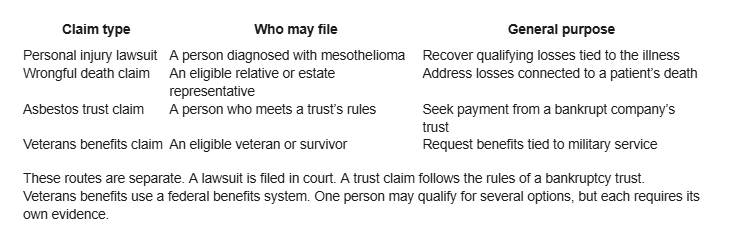
Main Types of Mesothelioma Claims
A case may involve more than one compensation path. The right option depends on the patient’s condition, exposure history, location, and the legal status of the companies involved.
Step 1 Reviewing the Diagnosis and Deadlines
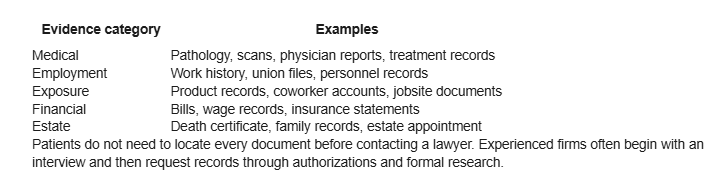
The first review usually covers the diagnosis, diagnosis date, residence, work history, and possible exposure locations. Medical records may include pathology reports, imaging results, physician notes, and treatment records. These documents help confirm the disease and establish when it was identified.
Deadlines differ by state and claim type. A personal injury deadline may be calculated differently from a wrongful death deadline. The patient’s home state is not always the only state that matters. Exposure sites, former employers, defendants, and other facts may affect where a case can be filed. Early review gives the legal team more time to study those choices.
Step 2 Building the Exposure History
The next stage focuses on how the patient may have encountered asbestos. Many people do not recall product names from jobs held 30 or 40 years earlier. Attorneys may review employment records, union files, military documents, invoices, jobsite records, product catalogs, and witness statements.
The questions often become specific. What work did the patient perform? Which equipment was nearby? Were insulation, gaskets, pumps, valves, boilers, cement products, or other materials cut or removed? Did dust collect on work clothes that were later brought home? The goal is to find evidence connecting the illness to one or more responsible parties.
Step 3 Identifying Compensation Sources
Once the exposure history takes shape, attorneys compare the evidence with active companies, successor businesses, insurers, and bankruptcy trusts. A former manufacturer may operate under a different name. Another company may have entered bankruptcy and funded a trust for qualifying claims. A contractor, supplier, or property owner could also matter.
This review can reveal separate sources of compensation that follow different schedules. It also prevents the case from being framed too narrowly around one employer or product when several parties may have contributed to the exposure history.
Step 4 Preparing and Filing the Claim
The filing documents depend on the route. A lawsuit generally includes a complaint naming the defendants and describing the illness and alleged exposure. Trust submissions use forms and evidence required by each trust. A wrongful death matter may also require a death certificate and estate documents.
What Happens After a Lawsuit Is Filed
Defendants receive the complaint and can respond. The parties then exchange information during discovery. This may include written questions, medical records, corporate documents, and sworn testimony. A patient may give a deposition about work history, diagnosis, exposure, and the effect of the disease on daily life.
Settlement discussions can occur at several points. Some defendants may resolve their part of the case while others continue. A matter that does not settle may proceed through motions and trial preparation. Trust claims can move on a separate schedule because they are not part of the court case.
No lawyer can promise an exact duration or outcome. Timing depends on the number of defendants, available records, filing location, disputed issues, and the patient’s health.
Understanding Legal Fees
Many mesothelioma firms accept cases on a contingency-fee basis. The fee is generally tied to money recovered rather than billed by the hour. The written agreement should explain the percentage, case expenses, and what happens if there is no recovery.
Families should ask who will manage the case, how updates will be provided, and whether the firm handles both lawsuits and trust claims. Clear answers make it easier to compare legal teams before signing an agreement.
Moving Forward After Diagnosis
A mesothelioma claim begins with medical confirmation and deadline review, then moves into exposure research. Attorneys identify possible defendants and trusts, prepare the evidence, and pursue the available claims. Each stage has a different purpose, and careful early work can shape the options available later.
Meirowitz & Wasserberg, LLP helps patients and families examine these questions while they focus on treatment and time together. Starting the review soon after diagnosis may help preserve records, locate witnesses, and protect filing rights.